
TECHNOLOGY
Organic Waste Resource Recycling Technology
Glue-zone
During sludge drying, there is a phenomenon where viscosity suddenly increases within the moisture content range of 65% to 50%.
In this range, the sludge becomes sticky like glue, and the rate of moisture evaporation significantly decreases.
(This is the main cause of energy cost issues, equipment damage, and drying defects in existing drying systems.)
Causing substances of glue zone
- Excess sludge in dewatered sludge (composed of microbial cells)
- Polymer coagulants used in the dewatering process
- Organic coagulants included in dewatered sludge (polysaccharides, sugars, oils, resins, etc.)
Supercritical CO2 drying technology
To avoid the glue zone, dissolve and extract polymer substances that cause the glue zone using supercritical CO2 which is a lipophilic substance
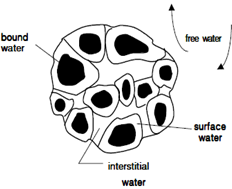 Sludge moisture structure
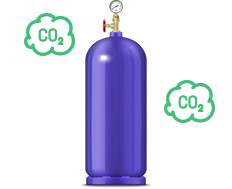 CO2 injection
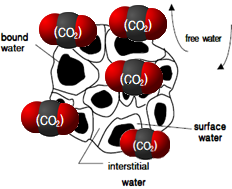 Destruction of intracellular CO2injection
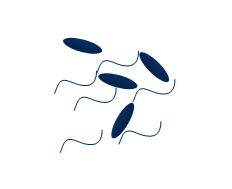 Dried sludge
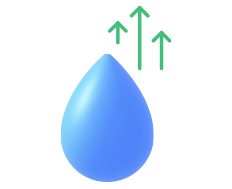 Moisture removal
Comparison of existing and developed technologies
Left and right scrolling is possible.
| Schematic diagram | 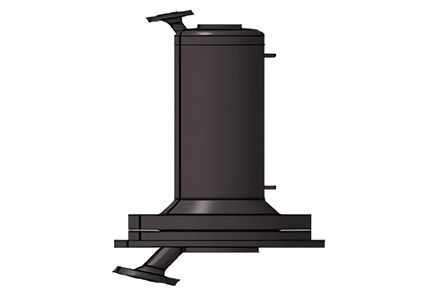 |
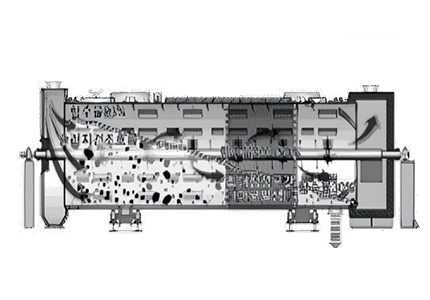 |
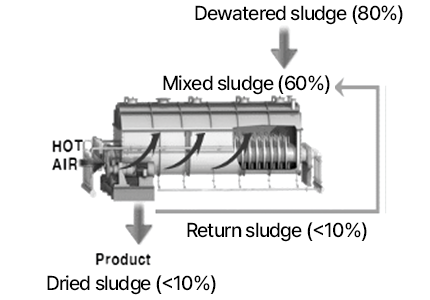 |
 |
|---|---|---|---|---|
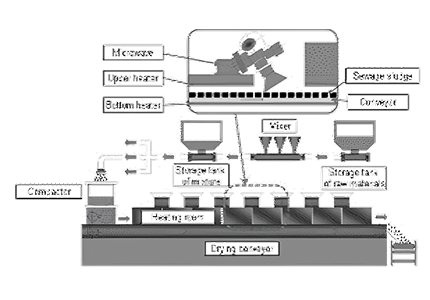
| Division | Supercritical CO2 | Direct drying | Indirect drying | MW drying |
| Principle | Dehydration drying by CO2 at medium temperature and high pressure | Direct drying by hot air | Indirect drying by steam heat | Drying using microwaves |
| Arrangement | Vertical | Horizontal | Horizontal | Horizontal |
| Evaporation energy required (Kcal/kg) |
280 | 860 | 760 | 754 |
| CO2 emissions (g CO2/kg) |
113 | 350 | 309 | 307 |
| Products | Below 10% | Below 10% | Below 10% | Below 10% |
| Thermal medium | Supercritical CO2 | Air | Air | Microwave |